


|
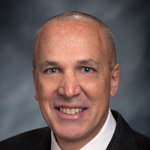
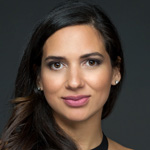
 From Inspection to Resolution 2026: Real Cases of How Dental Practices Navigated OSHA Investigations From Inspection to Resolution 2026: Real Cases of How Dental Practices Navigated OSHA Investigations
Presenter: Dr. Karson Carpenter Sponsor: Compliance Training Partners
|
|||||||||

|
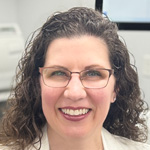
Digital Workflows for Predictable Adult Orthodontic-Restorative Treatment Implementing a Digital Ecosystem
Presenter: Dr. Melissa Shotell Sponsor: ClearCorrect
|
|||||||||

|
Smarter Smile Design: Align, Whiten, and Restore
Presenter: Dr. Nicholas Garcia Sponsor: uLab Systems
|
|||||||||

|
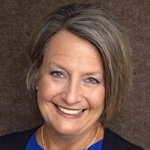
Oral Cancer Screening: It’s More Than Grasping the Tongue
Presenter: Susan Cotten, BSDH, RDH, OMT Sponsor: VOCO America
|
|||||||||

|
Composite Secrets They Never Taught You In Dental School (and Still Don’t)
Presenter: Dr. Michael Morgan Sponsor: Bisco
|
|||||||||
Featured On-Demand CE Webinars
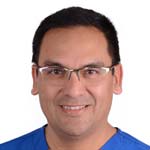 |
 CAD CAM, Nano-hybrid Composite Crowns on Immediate Loading Implants in the Aesthetic Area: Temporary or Definitive Restoration? CAD CAM, Nano-hybrid Composite Crowns on Immediate Loading Implants in the Aesthetic Area: Temporary or Definitive Restoration?
Presenter: Dr. Amilkar Rocha Sponsor: VOCO America CE Credits: 1 CEU (Self-Study) View Full Description » |
 |
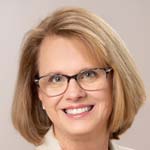
Smiles in Sickle Cell Care: Preventive Dental Hygiene Strategies for Enhanced Health
Presenter: Linda Chandler-Jacobs, BS, RDH Sponsor: VOCO America CE Credits: 1 CEU (Self-Study) View Full Description » |
 |
Maximizing Dental Suction and Safety: A New Approach to Amalgam Separation
Presenter: Dr. Marie Fluent Sponsor: Air Techniques CE Credits: 1 CEU (Self-Study) View Full Description » |
Featured Podcast Episodes
|
Episode 693: The Semi-Direct Composite Crown: Artistic, Conservative, and Chairside in 30 Minutes
View All Episodes from: VOCO Dental Podcast Series |
 Series: VOCO America
CE Credits: 0.5
Series: VOCO America
CE Credits: 0.5
Guest: Dr. Lauren Rainey and Dr. Mauricio Watanabe |
According to our guest, Dr. Mauricio Watanabe, a world-respected speaker and clinician, by using a highly filled nano-composite to fabricate the crown, the same material we use for our deep margin elevation and filling in our undercuts, a semi-direct full coverage restoration will provide long-term predictable success. And Dr. Watanabe has years of cases and research to support his opinion. The whole procedure can be done in 30 minutes when pouring your impression with a fast setting silicone material. So if you're looking to practice conservative dentistry and preserve as much natural tooth structure as possible and still deliver a full coverage crown, you might find the semi-direct restoration an excellent option for many of your large caries cases. Dr. Lauren Rainey, a well-respected clinician and KOL will also be joining us.
|
Episode 813: The Last Steps in Indirect Restorations Make All the Difference
View All Episodes from: Bisco Dental Podcast Series |
 Series: Bisco
CE Credits: 0.5
Series: Bisco
CE Credits: 0.5
Guest: Dr. Jennifer Derse |
So, you're about to deliver the final restoration. Do you realize that what you do during this appointment will play a major role not only in how long that restoration lasts, but also in how satisfied your patient is with the final result? From preparing the tooth and conditioning the intaglio surface to selecting the right bonding protocol and cement, these final chairside steps have a tremendous impact on long-term success. In this episode, Dr. Jennifer Derse shares practical, evidence-based techniques for cementing lithium disilicate and zirconia restorations, selecting the right materials, achieving outstanding shade matches, protecting the pulp, and avoiding the most common cementation mistakes. If you want more predictable, durable, and esthetic indirect restorations, you won't want to miss this episode.
|
Episode 770: Mastering Pulp Therapy and Perforations with Modern MTA
View All Episodes from: VOCO Dental Podcast Series |
|
Series: VOCO America
CE Credits: 0.5
Guest: Dr. Ryan Walsh |
This episode addresses how MTA—mineral trioxide aggregate—can be used as both an indirect and direct pulp cap and is ideal for perforations. MTA isn’t just an endodontist's material—it’s very much a general dentist’s material as well. Especially now, as more of us focus on minimally invasive dentistry and are doing everything we can to preserve the natural tooth. Our guest is Dr. Ryan Walsh, who maintains a full time private practice in Keller, TX. He is a Diplomate of the American Board of Endodontics (ABE) and serves on the Scientific Advisory Board of the Journal of Endodontics. Dr. Walsh maintains an appointment as Adjunct Assistant Professor at Texas A&M College of Dentistry and is actively involved in clinical research pertaining to bioactive materials, resorption processes, and clinical outcomes. He has lectured nationally and internationally on several topics in his specialty and has published multiple peer-reviewed articles and abstracts.